Elon Musk argues interstellar travel will shift economic metrics from currency to mass and energy
Story Overview
Musk's remark on interstellar economics stems from Casey Handmer's November 2025 blog post sketching a conceptual path to produce, store, and harness antimatter at industrial scales, where the required energy inputs would dwarf conventional financial measures.





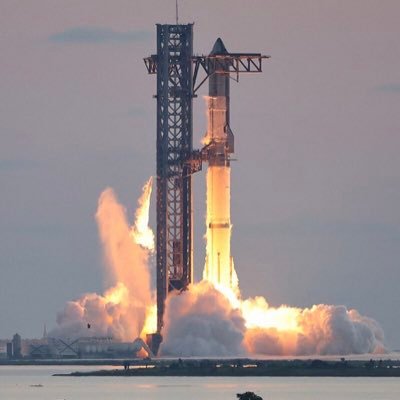
Technical Outline Leaves Key Gaps
Handmer breaks the challenge into production efficiency jumps beyond today's tiny CERN outputs, electrostatic storage of antihydrogen, and thermal engine designs, yet states no schedules or confirmed resources for any stage.
Physics Could Redefine Value Units
Musk frames the energy and mass volumes involved as so extreme that currency loses relevance, an idea that surfaces whenever antimatter propulsion enters long-range travel talks but stays unquantified here.
Positive users praise Musk's antimatter vision for interstellar travel as forward-thinking, while negative users call the trillion-dollar costs delusional and wildly impractical.

Approximately what percentage of Elon's predictions actually end up being true?
Around 16-20%.
Analyses of 43–50 specific time-based predictions found 16% on-schedule success (ClearerThinking) and 20% overall correct (Spencer Greenberg). ¹
A NYT review of 600+ claims showed ~19% achieved on target, with 35% late or unfulfilled. ²
Many timelines eventually occur years later, but strict accuracy remains low.